Anúncios
Have you ever wondered if a trip can feel like home instead of a checklist of sights?
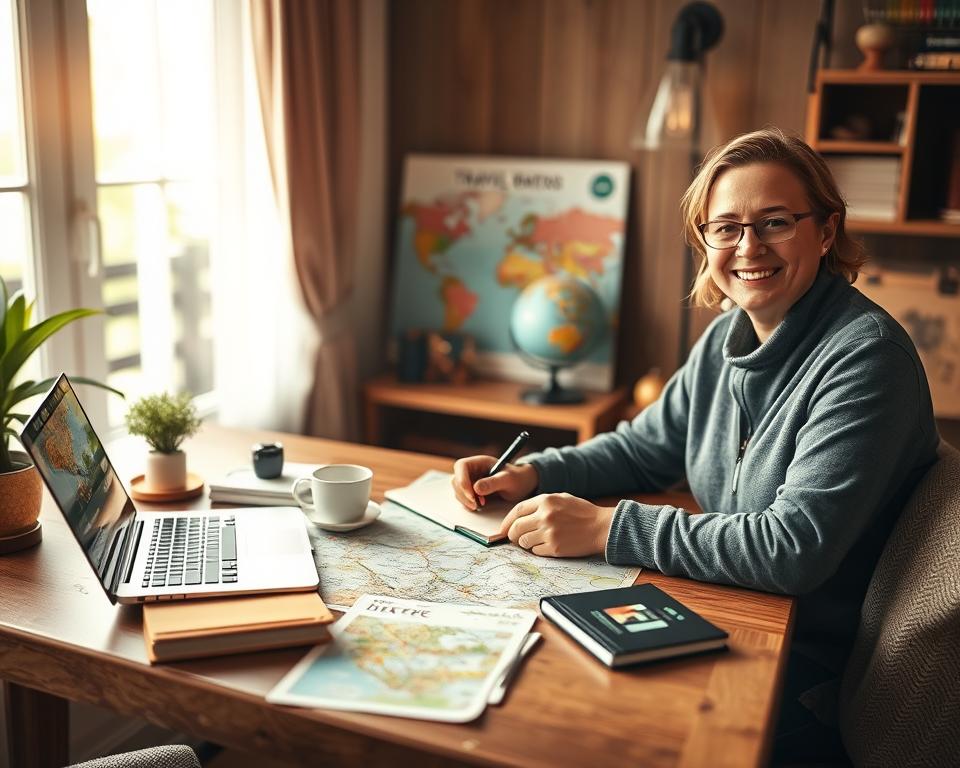
This post shows how a simple plan turns frantic movement into calm days. You’ll see examples from people who lingered in Vienna cafés, wandered Tuscany’s hill towns, and spent weeks in Luang Prabang with gentle mornings.
You’ll learn a clear guide to map a route, choose longer stays, and favor trains or boats so each stop feels like living. Focusing on fewer places unlocks local rhythms, market mornings, and conversations on quiet streets.
Think of this as your companion to plan a calmer route around the world. By the end, you’ll know how to keep only what matters and craft a dream that saves plenty of time for the small things that matter for years.
Adopt the slow travel mindset before you plan
Decide that connection, not checkpoints, will guide how you spend your days. That shift changes the way you measure success on a trip. Instead of a bucket list sprint, you choose moments that feel like real life. You reach sights when they are quiet and share meals that show a place’s season and flavor.
Anúncios
Let curiosity lead—follow a question, a smell from a bakery, or a conversation with a host. This approach frees you from rushing through famous spots and makes room for guides, hosts, and fellow people to shape your days.
- Reframe success: skip the endless list and make connection the goal.
- Design by curiosity: one question or scent can set your daily pace.
- Visit popular places at quiet times to avoid tourist stress and be more present.
- Choose a cultural thread: coffee rituals, markets, or a community-led tour and build around it.
- Protect your pace: saying no to excess keeps your vacation joyful and calm.
This post asks you to define what recharges you so taking time becomes part of your plan. Accept that missing a sight isn’t failure; it’s the space where your favorite stories begin.
Decide your time budget by weeks, not days
Think in weeks and you give each destination space to unfold. When you plan in weekly blocks, arrival, rest, and real exploration all fit into your schedule without racing the clock.
Anúncios
Anchor stays: why seven to ten days per city or region works
Aim for seven to ten days in a city or region. That span lets routines form, limits packing churn, and turns stays into living rather than checkpoints.
Plan buffer days for rest, weather, and serendipity
Build two buffer days into each week. Use them for weather changes, slow mornings, or an unexpected invite. These spare days keep you flexible and calm.
Use day trips sparingly to keep the core pace relaxed
Think of a day trip as seasoning: one or two per week is enough. In a 12-week summer plan, travelers averaged about seven days per stop and added light day trips like Versailles from Paris or Cannes from Nice.
- Budget time in weeks so arrival and recovery fit naturally.
- Return your car before big-city segments to ease connections.
- Plan months with backup options for busy sights and forecasts.
- Keep a weekly rhythm: two high-effort days, three medium, two light.
After the post-trip reflection, note which week lengths felt best. That way you tune future plans and protect your energy across a longer trip.
Choose fewer destinations and stay longer
Focus on fewer destinations so you can sink into daily life rather than rushing from sight to sight. This approach gives you room to form routines, meet locals, and enjoy simple pleasures without packing churn.
Build region-based clusters—pick a compact area and let it be your home base for days or weeks. Tuscany, for example, rewards lingering: wander Lucca and San Gimignano, taste wine, and take gentle drives between hill towns.
Cluster ideas that let you breathe
- Tuscany: medieval hill towns, wine, and food-forward days.
- The Cotswolds: honey-hued villages like Bibury and Bourton-on-the-Water and long countryside walks.
- West Cork: coastal villages, harbor walks, and multi-week festivals like the Bantry Walking Festival.
Clustering cuts transit time, gives you more days on the ground, and helps a destination feel like a place you live in. When unsure, drop one stop and add a few days to a favorite spot—future you will thank you.
Design your slow travel itinerary
Start with one simple purpose—food, art, nature, or connection—and let it guide your days. When your why is clear, choices about where to stay and what to skip fall into place.
Pick an A–B route and give each place a role
Map a line that moves forward instead of looping back. A summer example: Paris → Loire → Provence → French Riviera → Lake Como → Florence/Tuscany → Rome. This route minimizes backtracking and fits rail and short transfers.
Assign each city or region a role—big art hit, coastal rest, countryside reset—so the whole way reads like a story rather than a checklist.
Build a simple daily template
Use a compact daily cadence: one highlight, one local ritual, one open window for surprise. That mix balances effort and ease over long days and weeks.
- Plan light buffers on travel days: arrive, settle, and stretch before anything major.
- Debrief after each stop: note energy, budget, and which experiences mattered most.
- Aim for 70% planned, 30% open to protect your attention and invite serendipity.
Choose experiences that match your why: cookery in Umbria if food leads you, walking and wine in Tuscany for nature and taste, or focused museum days in Florence if art is your anchor.
Move smarter: trains, boats, and gentle road trips
Make the way between places an enjoyable, low-stress part of your journey. Choose modes that calm you and give back time on the road.
Prioritize rail over short flights to cut airport waits and lower air emissions. Trains let you read, nap, or plan the next day while landscapes pass by.
Coastal and lake options
For coasts, small-ship cruising in Croatia slips into quiet harbors and avoids crowds. On lakes like Como, ferries double as transit and scenic tours.
Purposeful driving and wooden sailers
When a car makes sense, use drives as transfers—move between towns through a region, not as a rushed loop. In Scotland, wooden sailboats to the Small Isles shape routes around weather and wildlife.
- Mix modes: rail between cities, ferries on water, a short car rental for rural parts.
- Use overnight trains sparingly to save daylight and add a recovery morning.
- Build time into transfer days for early check-ins or a bag-free walk.
These choices reduce stress, lower your footprint, and turn movement into a meaningful part of your world exploration. Let movement support your energy rather than drain it.
Eat and live local: make time for food, wine, and markets
Make meals the anchor of your days and you’ll find a place’s real character. Let mornings begin at markets, midday become a picnic, and evenings revolve around a lingering dinner with regional wine.
Cookery classes and wine walks in Italy
Want to learn by doing? Book a cookery class in Umbria to work with seasonal ingredients and local chefs. In Tuscany, choose a walking & wine day for gentle strolls and tastings led by people who know the land.
Shop markets for picnics and slow lunches
Visit markets to stock a picnic and taste produce at its best. Ask vendors for neighborhood tips and favorite stalls.
Let meals set the rhythm
- Let food guide your schedule: market mornings, a slow lunch, and dinner with local wine.
- Embrace café culture: linger in Vienna-style coffeehouses to rest and meet people.
- Try tapas in Granada: order a drink and sample small plates for social, affordable bites.
- Keep a short list: note a few local specialties, then let chance add surprises.
Tip: Choose restaurants near your base to reduce transit time and turn evenings into neighborhood walks. When meals set your days, you connect more deeply to the culture and life of each place.
Sample slow routes to inspire your plan
These sample routes illustrate how to turn weeks on the road into restful, rich chapters. Pick one and adapt the pace to what recharges you. Each route mixes city life, nature, and local rituals so your days feel lived-in, not listed.
Europe at an easy pace
Classic 12-week summer route:
- 2 weeks Paris for museums, parks, and picnic rhythms.
- 3 days Loire for châteaux and a hot air balloon over Chenonceau.
- 10 days Provence (Aix, calanques) and 10 on the French Riviera from Nice with day trips to Cannes, Èze, Monaco.
- 5 days Corsica by car ferry for wild beaches and mountains; short stays in Interlaken and Milan follow.
- 10 days Lake Como for ferries and wine evenings; 2 in Venice, 10 in Florence/Tuscany, then 2 weeks Amalfi and 2 days Rome.
Asia unrushed
Base in Kyoto for temple gardens, stay in Chiang Mai for festivals and gentle day trip loops, then linger in Luang Prabang for waterfalls and night markets.
Nature-forward escapes
Sail Scotland’s Small Isles on a wooden boat where weather guides the route, or choose small-ship cruising along Croatia’s Adriatic to reach quiet harbors.
Stateside sampler
Pair San Francisco’s bridges and art with LA’s beaches, Griffith hikes, and easy coastal days for a balanced week that still breathes.
Craft unhurried days: simple frameworks that work anywhere
Frame your days around simple rhythms—morning light, a single cultural stop, and an unhurried evening. This way you build flow without packing every hour.
Morning light: start with a short neighborhood walk, a coffee ritual, or a yoga hour that centers you. In Austria, yoga and hiking retreats pair mindful movement with gentle treks, which is a neat model for how to begin a day.
Midday cultural bite
Choose one focused stop: a museum, a garden, or a small-group guided walk. Vienna’s Prater Park and cafés are perfect for a midday pause that adds context without overwhelm.
Golden hour wandering
Leave afternoons open for rest, reading, or a second coffee. Then head out for markets and neighborhood streets at golden hour.
- Keep generous time blocks between activities so transitions feel calm.
- Use a simple scale—light / medium / effortful—to balance energy across your days.
- Book skip-the-line where it truly matters, and let most of the day unfold at a human pace.
- Pick one viewpoint per stop for a sunset ritual you’ll remember.
Make ritual your north star: repeat a small set of actions each morning and evening so each place grows a bit of your life. Walks, tram rides, and local classes become part of the journey and the best way to feel grounded on the road.
Pack lighter to move slower
Packing lighter changes how you move between stations, ferries, and winding cobblestone streets. A nimble bag means fewer stairs, faster check-ins, and more restful mornings.
Build a capsule wardrobe that fits trains, ferries, and old-town streets
Create outfits that mix and match so one set can work for weeks or months. A 12-week Europe summer route used a capsule wardrobe to manage trains and narrow streets and to carry on when possible.
Embrace carry-on setups for flexible transfers
Pick a carry-on and a personal item you can lift onto trains and ferries. That keeps your hands free on steep stairways and busy lanes.
- Mix-and-match pieces: outfits that cover city days and light hikes.
- Quick-dry layers: do laundry fast and save time at inns and hostels.
- Packing cubes & compact tech: organize by climate and pack a slim power strip and adapter.
- Minimal toiletries: refillable bottles let you restock on the road and cut weight for security.
- If a car is part of your plan, avoid overfilling the trunk—lighter loads ease every transfer.
Post-trip review: note what you didn’t wear and trim for the next trip. Packing light is the simplest way to give your travel a calmer way of moving. For a practical how-to, see this packing guide.
Sleep where slowness lives: lodging that supports your pace
Choose a home base that feels like a real neighborhood. Pick streets with markets, parks, and transit so daily errands and strolls become part of your city routine.
Mix longer rentals with short hotel stays to shape how you spend weeks on the road. A 12-week route worked well by using vacation rentals for extended stays and hotels for short segments.
Pick neighborhood bases near markets, parks, and transit
Book near a market and a green space—Vienna’s Prater is a great example—so you can start each morning with a walk and return home easily.
Balance longer vacation rentals with short hotel stays
- Rent for weeks: cook at home, do laundry, and feel settled.
- Use hotels for brief days: simplify check-in between regions.
- Prioritize walkable streets and nearby transit to save time.
- Check stairs, luggage space, and quiet hours—these shape daily life.
Nice served as an effective Riviera hub with fast trains to Cannes and Èze. Keep a running post-trip list of places that felt like a second home; it will guide months of future plans across the world.
Make it meaningful and sustainable
Think about how each move and meal can support local people and ecosystems. Your choices shape the day-to-day life of a community and the health of the place you visit.
Choose low-impact transport and seasonal, local food
Favor trains and ferries when you can—rail reduces a vacation’s carbon footprint and often eases connections. Self-guided cycling in Sweden or a yoga-and-walk retreat in Austria keeps impact low and opens gentle, local rhythms.
Eat seasonally: cookery classes in Umbria and market meals put money in regional hands and deepen your experience of culture.
Book ethical experiences and small-group options
Pick community-led walks, small-group tours, and workshops that pay people fairly. In Chiang Mai, choose community programs over exploitative shows to meet local guides and learn real practices.
Plan off-peak visits and mindful timing
- Visit islands and cities outside peak weeks to avoid tourist crush.
- Choose small ships in Croatia or wooden boats in Scotland to sidestep big-ship schedules.
- Consider long stays and fewer transfers—taking time reduces waste and deepens your journey.
Tip: affiliate links you see can point to vetted partners, but read each guide’s values before you book.
Conclusion
Carry these ideas into your next plan and let weeks, not hours, shape each destination you visit. When you choose longer anchors, a vacation starts to feel like home and your days open up to markets, cafés, and nearby beaches.
Use an A–B route, add buffer days, and pick one clear highlight each day. Mix city energy with quiet regions, islands, and a summer stretch in Europe or a Chiang Mai base to balance art, food, and nature.
You now have a guide to design calmer travel. Pick a region, book the first week, and start your journey. When in doubt, drop one stop and add two days—then watch how your dream trip becomes real.