Anúncios
You used to overfill your suitcase and worry about lost items. Now you’ll follow a simple process that aligns what you bring with your calendar and destination. This makes begins of trips calm and clear instead of rushed and stressful.
Start small: stage options on a rolling rack, edit what duplicates, and use a 3:1 top-to-bottom ratio to right-size outfits. The goal is versatile clothing and organized systems that free up space and mind.
Use packing cubes and a digital list to stop forgetfulness. Put must-have items—medications, chargers, jewelry, and a spare outfit—in your carry-on so delays don’t derail your plans.
With a repeatable routine, you’ll cut decision fatigue. You get to bring the shoes and products you love, while keeping your bag light, your luggage organized, and your trip low-stress.
Start With a Frequent-Traveler Mindset: Plan, Prioritize, and Reduce Stress
Begin with a simple plan that ties each day’s agenda to a clear outfit choice. Match your itinerary to the destination and the weather so you stop guessing and start packing with purpose. This approach cuts indecision and keeps your list lean.
Anúncios
Stage outfits two to three days before departure on a rolling rack so you can see duplicates and remove “just-in-case” items. Curate a capsule of versatile pieces that mix and match; fewer items mean fewer decisions on the road.
- Map each day of your trip to specific activities, then pick outfits that match those moments.
- Use a short checklist: check the forecast, confirm dress codes, and count active vs. dressy events.
- Keep a master digital list by category (clothing, toiletries, tech, meds) and reuse it.
- Limit wildcard options to one or two pieces only if they clearly fit the itinerary.
Block 30 focused minutes the night before to finalize the plan and stop adding items. If you want extra help to reduce corporate stress on the road, see this guide to reduce corporate travel stress and save time on future trips.
Build Your Packing Plan: Capsule outfits, smart lists, and time-saving prep
Build a compact wardrobe that gives you many outfits from a few well-chosen pieces. Focus on neutrals and quality basics that mix across days and settings. That reduces decision fatigue and keeps your bag lighter.
Anúncios
Create a capsule wardrobe that mixes and matches across your trip
Select versatile tops and bottoms that coordinate. Aim for pieces that layer well and move from day to night. Two or three accessories can change the vibe without taking space.
Use the 5-4-3-2-1 and 3:1 ratios to right-size your list
For a week, try the 5-4-3-2-1 rule: five socks/underwear, four tops, three bottoms, two shoes, one accessory. Apply the 3:1 ratio—three tops per bottom—to keep variety without excess.
Stage outfits on a rolling rack and refine over a few days
Hang full outfits, wear-test key pieces, and remove any duplicates. If an extra item breaks the math, leave it behind.
Keep a digital packing list and snap a pre-zip suitcase photo for insurance
- Create a master packing list covering clothes, toiletries, chargers, and meds.
- Reserve one cube or pouch for tops to visually enforce the 3:1 rule.
- Before you close the bag, photograph the open suitcase—useful for airline claims and quick replacement.
Use Packing Cubes and Toiletry Systems to Maximize Space and Organization
A simple cube routine will save space and make finding items fast on arrival. When you group categories, you reduce rummage and keep clothing neat.
When to choose compression vs. standard cubes
Pick compression cubes for bulky sweaters, hoodies, or joggers to shave down volume. Use standard cubes when you need a clear visual limit and want fewer wrinkles on structured pieces.
Rolling vs. folding inside cubes
Roll soft items like T-shirts and underwear to fill odd spaces.
Fold dress shirts, khakis, and skirts to keep edges crisp. Mixing roll and fold gives the best use of space while keeping outfits ready to wear.
TSA-friendly toiletry approach
Decant liquids into small travel containers and put them in a clear pouch or a Ziploc freezer bag inside your toiletry bag. This keeps toiletries reachable at security and limits spills.
Tip: Swap single-use products for multipurpose items to save weight and case room.
Handle dirty laundry and wet items
Carry a lightweight laundry cube or a roll-top waterproof bag to isolate damp or soiled clothes. Stashing it along the luggage spine stabilizes your case and keeps odors away from clean items.
- Use packing cubes to segment tops, bottoms, and underwear for fast unpacking.
- Choose compression when you need extra squeeze; use standard cubes to enforce a strict edit.
- Label or color-code cubes so you find what you need without digging.
For more on best-in-class cube setups, see the ultimate guide to packing cubes for detailed product ideas and comparisons.
Your carry-on luggage and personal item: the core of packing strategy travel
Think of your carry-on and personal item as one organized unit. A spacious, durable carry-on suitcase gives you all the allowed space the airline permits. Frequent flyers favor models like the Away Bigger Carry-On because it fits four to seven days of clothes without forcing a checked bag.
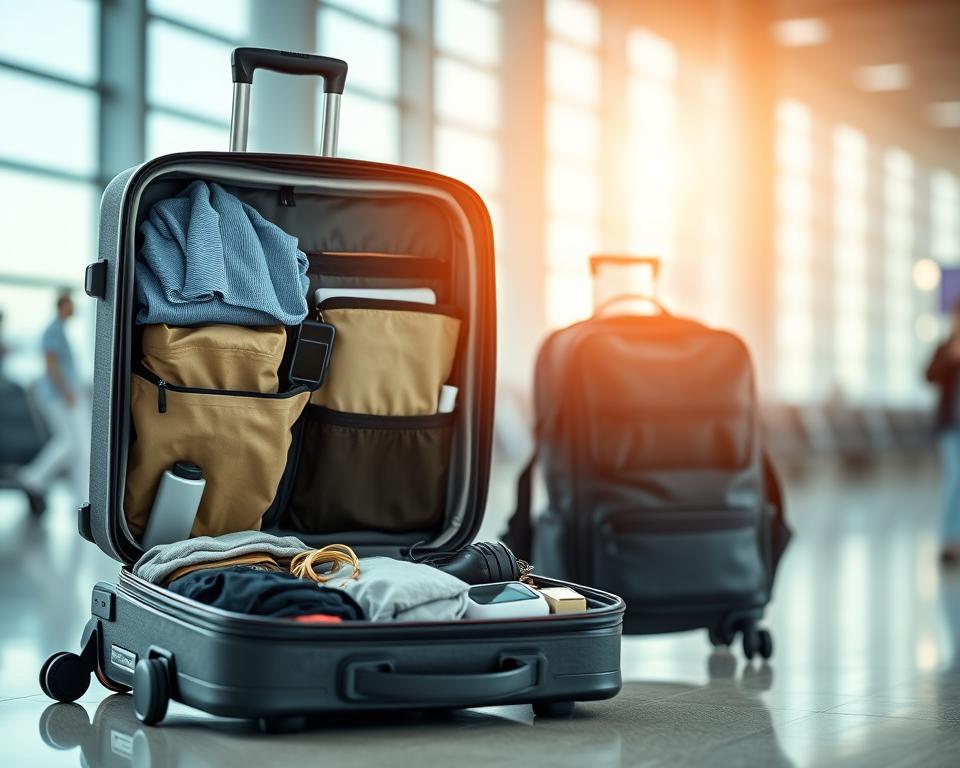
Choose a durable carry-on suitcase and maximize real estate without overpacking
Use the case wisely: keep soft layers and a flat spare outfit to pad fragile items. Use internal straps and exterior pockets to keep order.
Mind plane and airline dimensions. Confirm limits to avoid last-minute gate checks that undo your plan.
Leverage your personal item for shoes, toiletries, chargers, and in-flight essentials
- Make the personal item a strategic overflow: an extra pair of shoes, a toiletry bag, chargers, and a compact case for jewelry.
- Keep a true essentials kit in your carry-on bag—medications, a spare outfit, chargers, and key skincare—so delays don’t derail your trip.
- Place TSA liquids in a clear pouch at the top of your personal item for quick removal at the checkpoint.
- Distribute weight: rigid or heavy items go in the personal bag or near the wheel well; soft items fill gaps in the suitcase.
Conclusion
Make your last pre-trip step a quick edit and a photo; that habit protects your time and sanity. Use a capsule mindset, ratio-based lists, and one set of packing cubes to keep items organized. Keep must-have essentials in your carry-on and a toiletries kit ready so you don’t rush at the gate.
Commit to two small safeguards: finalize a day early and photograph the open case. Keep a living digital list on your phone and a lightweight laundry pouch for wet clothes. These simple tips save time and turn packing into a repeatable way to enjoy more of your trips without stress.